The Siege of Rhodes 1480 | Video | WiPlex Studios

Summary

Witness the dramatic Siege of Rhodes in 1480 through cinematic visuals. From the Ottoman vanguard gliding into Rhodes Harbor under Grand Admiral Mesih Pasha to the relentless bombardment by seasoned gunner captains, this video captures the tension of the assault.

Experience the unyielding defense of the Knights Hospitaller as they hold the St. Nicholas Tower against overwhelming odds. Watch the disciplined perimeter marches, the scarred ramparts under moonlight, and the strategic gravity of the Grand Master's command post amidst the rubble.

Feel the intensity of the siege engines rolling forward and the Knight counterattacks under the harsh midday sun. As the Mediterranean storm unleashes fury upon the battlements, witness the Ottoman strategic withdrawal and the eventual relief of survival.

Conclude with the solemn commemoration of the fallen and the preservation of victory in the historical archive. This visual narrative honors the resilience, legacy, and quiet triumph of endurance that defined the defense of Rhodes.
Story

In June 1480, at Rhodes Harbor, inside the Ottoman command galley, the Aegean dawn broke over a steel-gray horizon as the vanguard glided into view. In the foreground, Grand Admiral Mesih Pasha stood with a guarded advance along the polished teak deck, his broad shoulders squared beneath a heavy crimson kaftan that caught the morning light. Two junior officers lingered in the midground, their postures rigid, eyes fixed on the distant shoreline. Beyond them, the harbor walls of Rhodes rose like a jagged crown against the water. The St. Nicholas Tower anchored the visual field, its pale limestone battlements untouched and pristine. Mesih Pasha turned his head slowly toward the Ottoman artillery platform, his gaze locking onto the distant stone ramparts. The sea remained calm, reflecting the silent promise of conquest. The camera tracked him in a steady medium-full shot, capturing the subtle shift of his weight and the quiet tension of a fleet holding its breath.

In June 1480, at Rhodes Harbor, inside the Ottoman artillery platform, the air vibrated with controlled violence. The foreground subject, a seasoned Ottoman gunner captain, executed a slow step-and-hold walk along the stone parapet, his athletic frame draped in a weathered wool cloak that fluttered in the salt wind. Two supporting artillerymen stood in the midground, their postures steady, watching the distant walls. Behind them, massive bronze cannons rested as stable background machinery, their muzzles still warm from the opening salvo. The St. Nicholas Tower dominated the horizon, its pristine limestone now scarred by fresh impact cracks. The gunner captain turned his torso gradually toward the tower, his gaze scanning the expanding fractures. Golden hour light cut through the dust, illuminating the rough stone and the quiet aftermath of bombardment. The camera held a stable medium shot, emphasizing the tension between destruction and endurance.

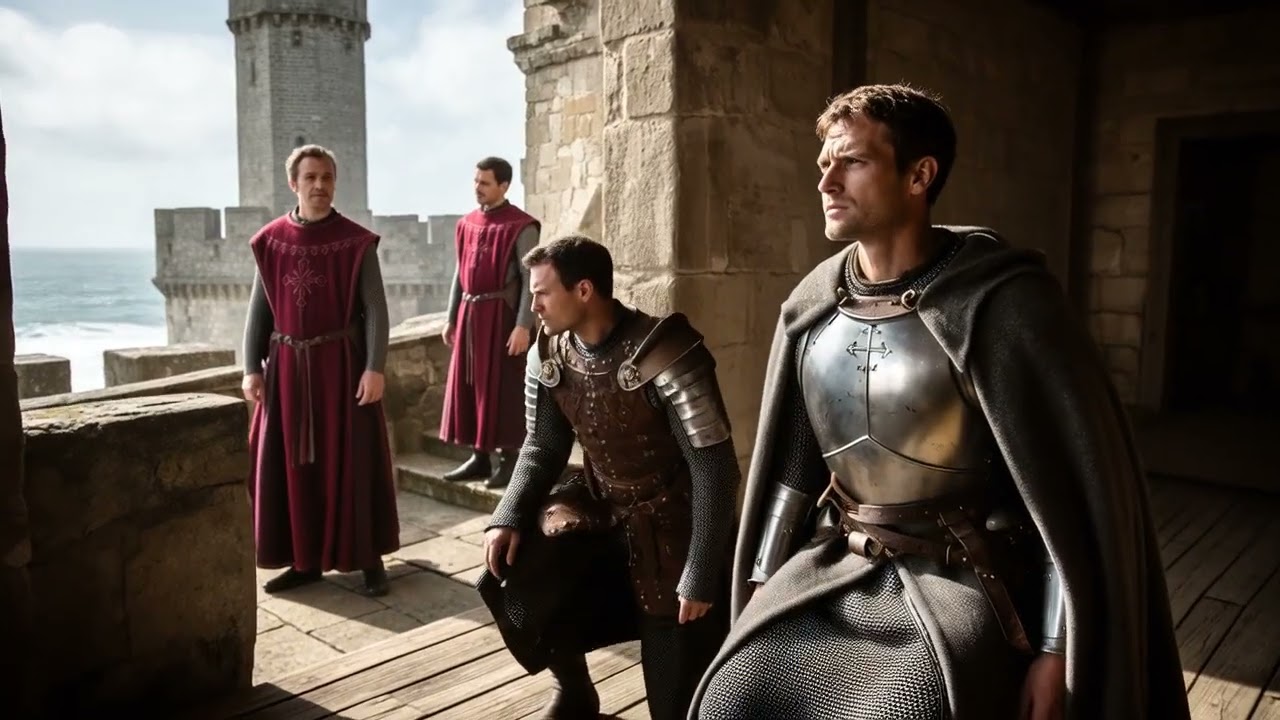
In July 1480, at the St. Nicholas Tower base, inside the Knights Hospitaller defense line, the knights formed a disciplined perimeter. The foreground subject, a broad-shouldered knight commander, marched slowly forward along the rubble-strewn walkway, his polished breastplate reflecting the harsh midday sun. Two supporting knights stood in the midground, their halberds planted firmly, their faces set in quiet resolve. Behind them, the tower's foundation groaned under relentless pressure, its pale stone now fractured and dusted with pulverized masonry. The knight commander descended a few weathered steps, his weight shifting deliberately as he surveyed the advancing Ottoman ranks. He turned his head toward the St. Nicholas Tower ramparts, his eyes tracking the shadowed archway. Stark chiaroscuro lighting carved deep shadows across his armor, highlighting the intricate metalwork and the grim reality of siege warfare. The camera tracked his measured advance in a medium-full frame, capturing the unyielding spirit of the defense.

In July 1480, upon the St. Nicholas Tower ramparts, inside the nighttime watch, the sentinels held a silent vigil. The foreground subject, a tall knight sentinel, stood with a guarded advance along the narrow stone walkway, his dark cloak billowing in the cool mountain breeze. Two supporting sentinels occupied the midground, their postures relaxed but alert, their faces illuminated by the faint glow of distant campfires. Behind them, the tower's battlements stood cracked and uneven, their limestone surfaces darkened by soot and shadow. The sentinel slowly turned his torso toward the Ottoman siege lines, his eyes tracking the movement of torches below. Subtle breathing and a slow blink emphasized the quiet tension of the dark hours. Cinematic shadows pooled around his boots, while volumetric moonlight cut through the still air. The camera held a stable medium shot, freezing the moment before the storm broke.

In July 1480, inside the Rhodes Castle courtyard, at the Grand Master's command post, the commander assumed direct authority. The foreground subject, a mature and athletic commander, executed a slow step-and-hold walk across the flagstones, his heavy velvet mantle catching the ambient light. Two supporting aides stood in the midground, their stances firm, their faces reflecting disciplined focus. Behind them, the courtyard walls framed a distant view of the St. Nicholas Tower, its limestone now deeply fissured and reinforced with timber braces. The commander descended a short flight of stone steps, his weight shifting with deliberate authority. He turned his head toward the outer siege lines, his gaze scanning the debris field. Strong volumetric lighting filtered through the archways, casting long, dramatic shadows across the scene. The camera tracked him in a steady medium-full shot, emphasizing leadership and strategic gravity.

In July 1480, along the outer siege lines, inside the Knight repair crews, the engineers worked under relentless pressure. The foreground subject, a broad-shouldered engineering captain, marched slowly forward through the rubble field, his leather armor scuffed but immaculate. Two supporting masons stood in the midground, their postures steady, their faces smudged with stone dust. Behind them, the St. Nicholas Tower rose heavily scarred, its battlements patched with fresh timber and sandbags. The captain turned his torso gradually toward the reinforced parapet, his eyes scanning the structural integrity. Golden hour light washed over the scene, illuminating the rough textures of weathered wood and fractured stone. Subtle breathing and a slow weight shift conveyed quiet determination. The camera held a stable medium shot, capturing the methodical rhythm of survival against overwhelming odds.

In July 1480, upon the Ottoman siege towers, inside the advancing ramparts, the wooden structures moved with mechanical precision. The foreground subject, a seasoned Ottoman siege master, executed a slow step-and-hold walk along the timber platform, his broad frame draped in a heavy wool tunic that caught the afternoon light. Two supporting engineers stood in the midground, their postures rigid, their faces set in quiet concentration. Behind them, the massive siege engines loomed over the battlefield, their wheels resting on packed earth. The St. Nicholas Tower dominated the background, its limestone battlements now deeply fractured and reinforced with iron clamps. The siege master turned his head toward the Rhodes wall walk, his gaze tracking the defensive preparations. Stark chiaroscuro lighting carved deep shadows across the wood grain and stone, emphasizing the scale of the assault. The camera tracked him in a steady medium-full frame, capturing the tension of impending impact.

In July 1480, along the Rhodes wall walk, inside the Knight counterattack line, the defenders held a disciplined formation. The foreground subject, a tall knight captain, marched slowly forward along the stone parapet, his polished armor reflecting the harsh midday sun. Two supporting archers stood in the midground, their postures steady, their faces set in quiet resolve. Behind them, the St. Nicholas Tower rose heavily scarred, its limestone surfaces blackened by pitch and flame. The captain descended a few weathered steps, his weight shifting deliberately as he surveyed the Ottoman positions. He turned his torso toward the breach, his expression hardened by duty. Cinematic shadows pooled around his boots, while volumetric sunlight cut through the still air. The camera held a stable medium shot, freezing the moment before the counterstrike.

In July 1480, inside the garrison barracks, at the Knight preparation hall, the warriors braced for the final stand. The foreground subject, a mature knight standard-bearer, stood with a guarded advance along the wooden floorboards, his athletic frame draped in a heavy wool surcoat that caught the dim light. Two supporting guards stood in the midground, their postures firm, their faces reflecting disciplined focus. Behind them, the heavy timber doors framed a distant view of the St. Nicholas Tower, its limestone now deeply fissured and reinforced with iron braces. The standard-bearer slowly turned his head toward the courtyard, his gaze locking onto the defensive preparations. Strong volumetric lighting filtered through the high windows, casting long, dramatic shadows across the scene. The camera tracked him in a steady medium-full shot, emphasizing leadership and strategic gravity.

In July 1480, at the harbor mouth, inside the Ottoman fleet observation deck, the horizon shifted with sudden urgency. The foreground subject, a seasoned Ottoman admiral, executed a slow step-and-hold walk along the polished teak railing, his broad shoulders squared beneath a heavy silk vest that caught the evening light. Two supporting navigators stood in the midground, their postures rigid, their faces reflecting quiet tension. Behind them, the massive galleys rested on calm waters, their oars folded against the hulls. The St. Nicholas Tower dominated the background, its limestone battlements now deeply scarred and reinforced with timber supports. The admiral turned his torso gradually toward the Castle battlements, his eyes scanning the storm-wracked stones. Golden hour light washed over the scene, illuminating the rough textures of weathered wood and fractured stone. The camera held a stable medium shot, capturing the tension of a turning tide.

In July 1480, atop the Castle battlements, inside the Knight watch post, the Mediterranean storm unleashed its fury. The foreground subject, a tall knight watch captain, marched slowly forward along the stone walkway, his leather armor scuffed but immaculate. Two supporting sentinels stood in the midground, their postures steady, their faces set in quiet resolve. Behind them, the St. Nicholas Tower rose heavily scarred, its limestone surfaces darkened by rain and wind. The captain descended a few weathered steps, his weight shifting deliberately as he surveyed the churning seas. He turned his head toward the harbor, his gaze tracking the battered Ottoman fleet. Stark chiaroscuro lighting carved deep shadows across his armor, highlighting the intricate metalwork and the grim reality of the storm. The camera tracked him in a steady medium-full frame, capturing the unyielding spirit of the defense.

In July 1480, inside the Ottoman command tent, at the strategic withdrawal, the decision to retreat was finalized. The foreground subject, a mature Ottoman vizier, stood with a guarded advance along the woven carpet, his athletic frame draped in a heavy wool cloak that caught the ambient light. Two supporting officers stood in the midground, their postures firm, their faces reflecting disciplined focus. Behind them, the heavy canvas walls framed a distant view of the St. Nicholas Tower, its limestone now deeply fissured and reinforced with iron clamps. The vizier slowly turned his torso toward the harbor, his eyes scanning the battered fleet. Strong volumetric lighting filtered through the tent opening, casting long, dramatic shadows across the scene. The camera held a stable medium shot, capturing the quiet gravity of retreat.

In August 1480, at the Rhodes Harbor docks, inside the Knight observation platform, the Ottoman fleet prepared to depart. The foreground subject, a broad-shouldered knight harbor guard, executed a slow step-and-hold walk along the wooden pier, his polished breastplate reflecting the morning light. Two supporting sailors stood in the midground, their postures steady, their faces set in quiet resolve. Behind them, the St. Nicholas Tower rose heavily scarred, its limestone battlements now patched with fresh timber and sandbags. The guard descended a few weathered steps, his weight shifting deliberately as he watched the ships turn their prows. He turned his head toward the open sea, his gaze locking onto the departing sails. Cinematic shadows pooled around his boots, while volumetric sunlight cut through the still air. The camera tracked him in a steady medium-full shot, emphasizing the relief of survival.

In August 1480, along the siege trenches, inside the Knight survey line, the aftermath was carefully assessed. The foreground subject, a tall knight quartermaster, marched slowly forward through the debris field, his leather armor scuffed but immaculate. Two supporting engineers stood in the midground, their postures firm, their faces reflecting disciplined focus. Behind them, the St. Nicholas Tower rose heavily scarred, its limestone surfaces blackened by pitch and flame. The quartermaster turned his torso gradually toward the reinforced parapet, his eyes scanning the structural integrity. Golden hour light washed over the scene, illuminating the rough textures of weathered wood and fractured stone. Subtle breathing and a slow weight shift conveyed quiet determination. The camera held a stable medium shot, capturing the methodical rhythm of recovery.

In August 1480, inside the Cathedral square, at the Knight commemoration, the fallen were honored with solemn reverence. The foreground subject, a mature knight chaplain, stood with a guarded advance along the stone pavement, his athletic frame draped in a heavy wool vestment that caught the ambient light. Two supporting acolytes stood in the midground, their postures steady, their faces set in quiet devotion. Behind them, the cathedral arches framed a distant view of the St. Nicholas Tower, its limestone now deeply fissured and reinforced with iron braces. The chaplain slowly turned his head toward the tower, his gaze locking onto the enduring monument. Strong volumetric lighting filtered through the stained glass, casting long, dramatic shadows across the scene. The camera tracked him in a steady medium-full shot, emphasizing legacy and remembrance.

In August 1480, along the City walls, inside the Knight historical archive, the victory was preserved for future generations. The foreground subject, a broad-shouldered knight chronicler, executed a slow step-and-hold walk along the stone parapet, his polished armor reflecting the evening light. Two supporting scribes stood in the midground, their postures firm, their faces reflecting disciplined focus. Behind them, the St. Nicholas Tower rose heavily scarred, its limestone battlements now deeply scarred and reinforced with timber supports. The chronicler descended a few weathered steps, his weight shifting deliberately as he surveyed the restored city. He turned his torso toward the harbor, his eyes scanning the calm waters. Stark chiaroscuro lighting carved deep shadows across his armor, highlighting the intricate metalwork and the quiet triumph of endurance. The camera held a stable medium shot, capturing the final note of resilience.

Back to Channel