A sweeping historical epic capturing the pivotal Battle of Shipka Pass in 1877. From the mist-shrouded pines to the thunderous artillery barrages, every frame immerses viewers in the raw tension of war. Follow Russian commanders, Ottoman scouts, and Bulgarian sharpshooters as they engage in a brutal, multi-phase struggle for control of the mountain pass. Cinematic lighting, authentic uniforms, and immersive sound design bring history to life. Each scene transitions with dramatic precision, highlighting strategy, sacrifice, and resilience. A must-watch for history and war film enthusiasts.
Based on real events of the Russo-Turkish War, this film honors the courage of those who defended the pass — a turning point that reshaped the Balkans.
In late August 1877, inside the jagged northern throat of the Shipka Pass, Russian Fourth Battalion commanders hold the high ground. Broad-shouldered officers stand braced against weathered pine trunks, their heavy wool coats absorbing the mountain chill. A lead commander grips a brass field telescope, scanning the tree line below. Behind him, a staff officer rests a hand on a polished wooden map case, eyes fixed on the valley floor. The air carries the sharp scent of damp earth and gunpowder residue. Golden hour light cuts through the canopy, casting long cinematic shadows across the rough stone earthworks. The commander lowers the telescope and points toward a distant ridge. His gaze locks onto a cluster of Ottoman scouts moving through the lower pines. The camera follows his direction, pushing slowly into the treeline where the enemy vanguard prepares its first strike.
In late August 1877, beneath the shadowed canopy of the lower pine ridge, Ottoman light infantry scouts advance through the undergrowth. A lead scout marches slowly, his weathered leather tunic blending with the forest floor. Beside him, a spotter stands braced against a mossy boulder, peering through a polished brass spyglass. A third man carries a single canvas satchel, his posture rigid as he watches the northern crest. The mountain wind gently lifts the edges of their turbans, revealing sharp, mature features and steady breathing. Volumetric light filters through the branches, illuminating dust motes that drift lazily in the still air. The spotter lowers his glass and gestures toward the distant stone platform. His hand traces a clear path upward, drawing attention to the fortified ridge where Russian artillery crews await the opening volley.
In late August 1877, atop the northern crest stone platform, Ottoman artillery crews deliver their opening barrage. A gunner stands firmly beside a bronze field gun, his hands resting on the polished wooden trail. Behind him, a loader braces his back against a heavy ammunition chest, his breath steady in the thin mountain air. A third crew member scans the horizon through a brass rangefinder, his posture rigid with focused intent. The cannon fires with a controlled recoil, sending a plume of white vapor into the crisp autumn sky. Thick fabrics of their uniforms ripple in the sudden wind, while golden sunlight catches the polished metal of the carriage. The lead gunner shifts his weight slowly, watching the distant Russian trenches for impact. His eyes track the smoke drifting toward the tree line, where Bulgarian volunteer sharpshooters prepare their defensive positions.
In late August 1877, along the southern trench line, Bulgarian volunteer sharpshooters return the Ottoman barrage with disciplined precision. A lead marksman stands braced against a reinforced timber parapet, his rifle shouldered firmly as he aims down the slope. Behind him, a spotter grips a brass binocular case, scanning the enemy gun positions for flash patterns. A third volunteer holds a single leather ammunition pouch, his stance wide and grounded against the uneven earth. The mountain air vibrates with the sharp crack of repeating rifles, each shot echoing off the limestone cliffs. Strong chiaroscuro lighting highlights the weathered wood of the trenches and the heavy wool of their coats. The lead marksman lowers his rifle slightly, tilting his head toward a distant Ottoman reserve column. His gaze locks onto the advancing infantry, drawing the camera’s focus toward the next wave of the assault.
In early September 1877, along the eastern flank road, Ottoman reserve infantry march in a steady, disciplined advance. A company commander walks slowly beside a mounted horse, his hand resting lightly on the reins. Behind him, a standard-bearer carries a single silk banner, the fabric heavy with mountain damp. A third soldier grips a wooden rifle stock, his eyes fixed on the northern crest. The terrain slopes gently upward, revealing the fortified positions ahead. Volumetric light breaks through the morning haze, casting long shadows across the packed dirt path. The commander halts his pace, raising a closed fist to signal the formation. His gaze shifts toward a cluster of Russian field guns positioned near the central ridge. His eyes trace the line of artillery, drawing attention to the defensive battery that will soon face the next coordinated push.
In early September 1877, at the central ridge battery, Russian artillery crews deliver a thunderous counter-barrage. A chief gunner stands firmly beside a heavy iron cannon, his hands resting on the polished wooden trail. Behind him, a spotter braces against a stone ammunition crate, peering through a brass telescope. A third crew member holds a single leather logbook, his posture rigid as he tracks firing intervals. The cannon fires with a controlled recoil, sending a sharp report across the valley. Golden hour light illuminates the soot-stained metal and the heavy wool uniforms of the crew. The chief gunner shifts his weight slowly, watching the distant Ottoman columns for impact. His eyes lock onto a cluster of advancing infantry near the southern slope, drawing the camera’s focus toward the next wave of the assault.
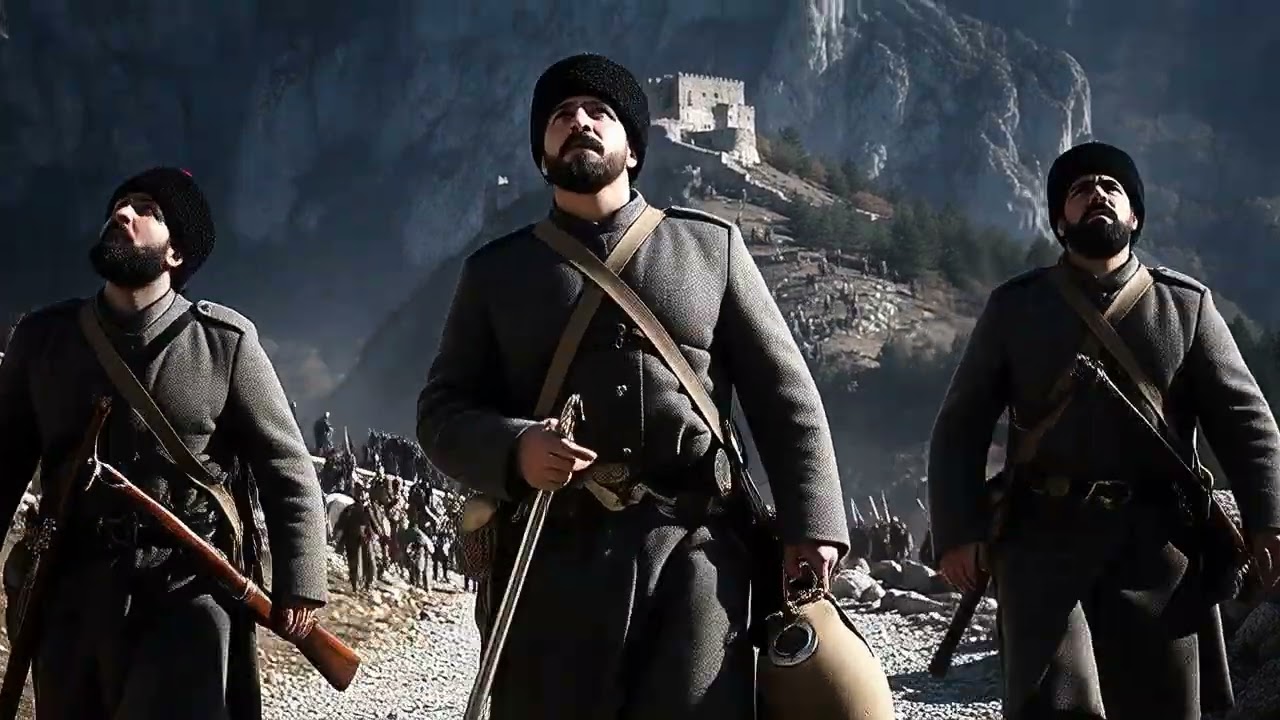
In early September 1877, across the southern slope infantry positions, Ottoman infantry advance in a coordinated push toward the Russian lines. A lead officer marches slowly up the incline, his hand resting on a polished sword hilt. Behind him, a rifleman carries a single canvas water flask, his steps measured against the loose gravel. A third soldier grips a wooden rifle stock, his gaze fixed on the fortified crest ahead. The mountain wind lifts the edges of their coats, revealing mature, athletic frames moving with disciplined purpose. Stark chiaroscuro lighting cuts across the uneven terrain, highlighting the rough stone outcrops and heavy wool fabrics. The lead officer halts his march, raising a closed fist to signal the formation. His eyes track toward a cluster of Bulgarian volunteers positioned near the central trench, drawing attention to the next defensive stand.
In early September 1877, along the central trench line, Bulgarian volunteers hold their ground against the advancing Ottoman wave. A lead defender stands braced against a reinforced timber parapet, his rifle shouldered firmly as he scans the slope. Behind him, a spotter grips a brass binocular case, watching for enemy movement. A third volunteer holds a single leather ammunition pouch, his stance wide and grounded against the uneven earth. The air carries the sharp scent of damp soil and spent powder. Strong volumetric lighting filters through the canopy, casting cinematic shadows across the weathered wood and rough stone. The lead defender lowers his rifle slightly, tilting his head toward a distant Ottoman reserve column. His gaze locks onto the approaching infantry, drawing the camera’s focus toward the next phase of the battle.
In mid-September 1877, along the northern reserve ridge, Ottoman reserve cavalry prepare for a flanking maneuver. A squadron leader rides slowly on a mounted horse, his hand resting lightly on the reins. Behind him, a scout carries a single brass spyglass, his posture rigid as he surveys the Russian left flank. A third trooper grips a wooden rifle stock, his eyes fixed on the distant battery positions. The mountain terrain rises sharply, revealing the fortified crest ahead. Golden hour light breaks through the morning haze, illuminating the heavy leather saddles and weathered wool uniforms. The squadron leader halts his pace, raising a closed fist to signal the formation. His gaze shifts toward a cluster of Russian supply runners moving along the lower path, drawing attention to the next logistical challenge.
In mid-September 1877, along the lower supply path, Russian supply runners advance with heavy ammunition boxes. A lead runner marches slowly up the incline, his hands gripping a single wooden crate firmly. Behind him, a second carrier carries a canvas satchel, his steps measured against the packed dirt. A third runner holds a brass compass, his gaze fixed on the northern crest. The mountain wind lifts the edges of their coats, revealing mature, athletic frames moving with disciplined purpose. Stark chiaroscuro lighting cuts across the uneven terrain, highlighting the rough stone outcrops and heavy wool fabrics. The lead runner halts his pace, raising a closed fist to signal the formation. His eyes track toward a cluster of Ottoman artillery near the central ridge, drawing attention to the next coordinated push.
In mid-September 1877, at the central ridge battery, Ottoman artillery crews deliver a sustained barrage against the Russian positions. A chief gunner stands firmly beside a bronze field gun, his hands resting on the polished wooden trail. Behind him, a loader braces against a heavy ammunition chest, his breath steady in the thin mountain air. A third crew member scans the horizon through a brass rangefinder, his posture rigid with focused intent. The cannon fires with a controlled recoil, sending a plume of white vapor into the crisp autumn sky. Thick fabrics of their uniforms ripple in the sudden wind, while golden sunlight catches the polished metal of the carriage. The lead gunner shifts his weight slowly, watching the distant Russian trenches for impact. His eyes lock onto a cluster of Bulgarian sharpshooters near the southern slope, drawing the camera’s focus toward the next defensive line.
In mid-September 1877, along the southern trench line, Bulgarian sharpshooters return the Ottoman barrage with disciplined precision. A lead marksman stands braced against a reinforced timber parapet, his rifle shouldered firmly as he aims down the slope. Behind him, a spotter grips a brass binocular case, scanning the enemy gun positions for flash patterns. A third volunteer holds a single leather ammunition pouch, his stance wide and grounded against the uneven earth. The mountain air vibrates with the sharp crack of repeating rifles, each shot echoing off the limestone cliffs. Strong chiaroscuro lighting highlights the weathered wood of the trenches and the heavy wool of their coats. The lead marksman lowers his rifle slightly, tilting his head toward a distant Ottoman reserve column. His gaze locks onto the advancing infantry, drawing the camera’s focus toward the next wave of the assault.
In late September 1877, along the eastern flank road, Ottoman reserve infantry march in a steady, disciplined advance. A company commander walks slowly beside a mounted horse, his hand resting lightly on the reins. Behind him, a standard-bearer carries a single silk banner, the fabric heavy with mountain damp. A third soldier grips a wooden rifle stock, his eyes fixed on the northern crest. The terrain slopes gently upward, revealing the fortified positions ahead. Volumetric light breaks through the morning haze, casting long shadows across the packed dirt path. The commander halts his pace, raising a closed fist to signal the formation. His gaze shifts toward a cluster of Russian field guns positioned near the central ridge. His eyes trace the line of artillery, drawing attention to the defensive battery that will soon face the next coordinated push.
In late September 1877, at the central ridge battery, Russian artillery crews deliver a thunderous counter-barrage. A chief gunner stands firmly beside a heavy iron cannon, his hands resting on the polished wooden trail. Behind him, a spotter braces against a stone ammunition crate, peering through a brass telescope. A third crew member holds a single leather logbook, his posture rigid as he tracks firing intervals. The cannon fires with a controlled recoil, sending a sharp report across the valley. Golden hour light illuminates the soot-stained metal and the heavy wool uniforms of the crew. The chief gunner shifts his weight slowly, watching the distant Ottoman columns for impact. His eyes lock onto a cluster of advancing infantry near the southern slope, drawing the camera’s focus toward the next wave of the assault.
In late September 1877, across the southern slope infantry positions, Ottoman infantry advance in a coordinated push toward the Russian lines. A lead officer marches slowly up the incline, his hand resting on a polished sword hilt. Behind him, a rifleman carries a single canvas water flask, his steps measured against the loose gravel. A third soldier grips a wooden rifle stock, his gaze fixed on the fortified crest ahead. The mountain wind lifts the edges of their coats, revealing mature, athletic frames moving with disciplined purpose. Stark chiaroscuro lighting cuts across the uneven terrain, highlighting the rough stone outcrops and heavy wool fabrics. The lead officer halts his march, raising a closed fist to signal the formation. His eyes track toward a cluster of Bulgarian volunteers positioned near the central trench, drawing attention to the next defensive stand.
In late September 1877, along the central trench line, Bulgarian volunteers hold their ground against the advancing Ottoman wave. A lead defender stands braced against a reinforced timber parapet, his rifle shouldered firmly as he scans the slope. Behind him, a spotter grips a brass binocular case, watching for enemy movement. A third volunteer holds a single leather ammunition pouch, his stance wide and grounded against the uneven earth. The air carries the sharp scent of damp soil and spent powder. Strong volumetric lighting filters through the canopy, casting cinematic shadows across the weathered wood and rough stone. The lead defender lowers his rifle slightly, tilting his head toward a distant Ottoman reserve column. His gaze locks onto the approaching infantry, drawing the camera’s focus toward the next phase of the battle.
In early October 1877, along the northern reserve ridge, Ottoman reserve cavalry prepare for a final flanking maneuver. A squadron leader rides slowly on a mounted horse, his hand resting lightly on the reins. Behind him, a scout carries a single brass spyglass, his posture rigid as he surveys the Russian left flank. A third trooper grips a wooden rifle stock, his eyes fixed on the distant battery positions. The mountain terrain rises sharply, revealing the fortified crest ahead. Golden hour light breaks through the morning haze, illuminating the heavy leather saddles and weathered wool uniforms. The squadron leader halts his pace, raising a closed fist to signal the formation. His gaze shifts toward a cluster of Russian supply runners moving along the lower path, drawing attention to the next logistical challenge.
In early October 1877, along the lower supply path, Russian supply runners advance with heavy ammunition boxes. A lead runner marches slowly up the incline, his hands gripping a single wooden crate firmly. Behind him, a second carrier carries a canvas satchel, his steps measured against the packed dirt. A third runner holds a brass compass, his gaze fixed on the northern crest. The mountain wind lifts the edges of their coats, revealing mature, athletic frames moving with disciplined purpose. Stark chiaroscuro lighting cuts across the uneven terrain, highlighting the rough stone outcrops and heavy wool fabrics. The lead runner halts his pace, raising a closed fist to signal the formation. His eyes track toward a cluster of Ottoman artillery near the central ridge, drawing attention to the next coordinated push.
In early October 1877, at the central ridge battery, Ottoman artillery crews deliver a desperate barrage against the Russian positions. A chief gunner stands firmly beside a bronze field gun, his hands resting on the polished wooden trail. Behind him, a loader braces against a heavy ammunition chest, his breath steady in the thin mountain air. A third crew member scans the horizon through a brass rangefinder, his posture rigid with focused intent. The cannon fires with a controlled recoil, sending a plume of white vapor into the crisp autumn sky. Thick fabrics of their uniforms ripple in the sudden wind, while golden sunlight catches the polished metal of the carriage. The lead gunner shifts his weight slowly, watching the distant Russian trenches for impact. His eyes lock onto a cluster of Bulgarian sharpshooters near the southern slope, drawing the camera’s focus toward the next defensive line.
In early October 1877, along the southern trench line, Bulgarian sharpshooters hold their ground as the Ottoman advance finally breaks. A lead marksman stands braced against a reinforced timber parapet, his rifle shouldered firmly as he scans the retreating slope. Behind him, a spotter grips a brass binocular case, watching the enemy columns withdraw into the valley. A third volunteer holds a single leather ammunition pouch, his stance wide and grounded against the uneven earth. The mountain air clears of smoke, revealing the golden hour light washing over the weathered wood and rough stone. The lead marksman lowers his rifle slightly, tilting his head toward the distant northern crest. His gaze locks onto the fortified positions, drawing the camera’s focus toward the secured pass and the enduring legacy of the defense.