In the pre-dawn chill of 202 BC, Roman vanguard scouts move like silent shadows across the Zama plains, their pilum held firm, eyes locked on the distant Carthaginian camp.
At first light, Massinissa’s Numidian cavalry align along the western approach, their curved javelins ready, horses in perfect rhythm.
Carthaginian war elephants advance in a towering phalanx, their mahouts gripping goads, armored beasts moving with unstoppable force.
By mid-morning, Roman light infantry unleash a coordinated barrage of javelins, their velites striking with precision.
Carthaginian mercenaries surge forward in a wall of iron, long swords drawn, driven by fury and desperation.
At noon, the Roman first line charges in a disciplined wall of steel, gladius in hand, determined to break the enemy center.
Hannibal’s veterans hold their ground, long spears braced against the crushing Roman advance.
Numidian skirmishers circle the enemy rear, their horses in sync, javelins poised to strike.
Roman cavalry pursuit surges forward in a thunderous wave, cavalry spears ready to shatter the retreating flank.
In the central command tent, Carthaginian officers observe the collapse, staffs in hand, preparing for final withdrawal.
The Roman second line deploys as a final wall of iron, pilum raised, ready to deliver the decisive blow.
Carthaginian reserves surge forward to anchor the crumbling center, long swords gleaming under the sun.
Numidian heavy riders align for a final coordinated strike, lances at rest, eyes fixed on the enemy.
At nightfall, the Roman flanking wedge pierces the enemy rear, gladius drawn, momentum unstoppable.
Carthaginian center breakers stand firm, long spears braced, determined to hold the line.
On the western command hill, Roman officers observe victory, staffs in hand, eyes on the fading battlefield.
Numidian cavalry return in a final wave, their horses in perfect unison, javelins ready.
At sunrise, Carthaginian rout formation breaks into disciplined retreat, long swords drawn, moving with urgency.
By mid-morning, Roman victory advance moves forward in a final display of iron and resolve, gladius raised, sun at their backs.
On the eastern plateau, Numidian victory stance holds firm, heavy lances at rest, eyes on the horizon.
Peace is secured, the era ends, and a new order begins.
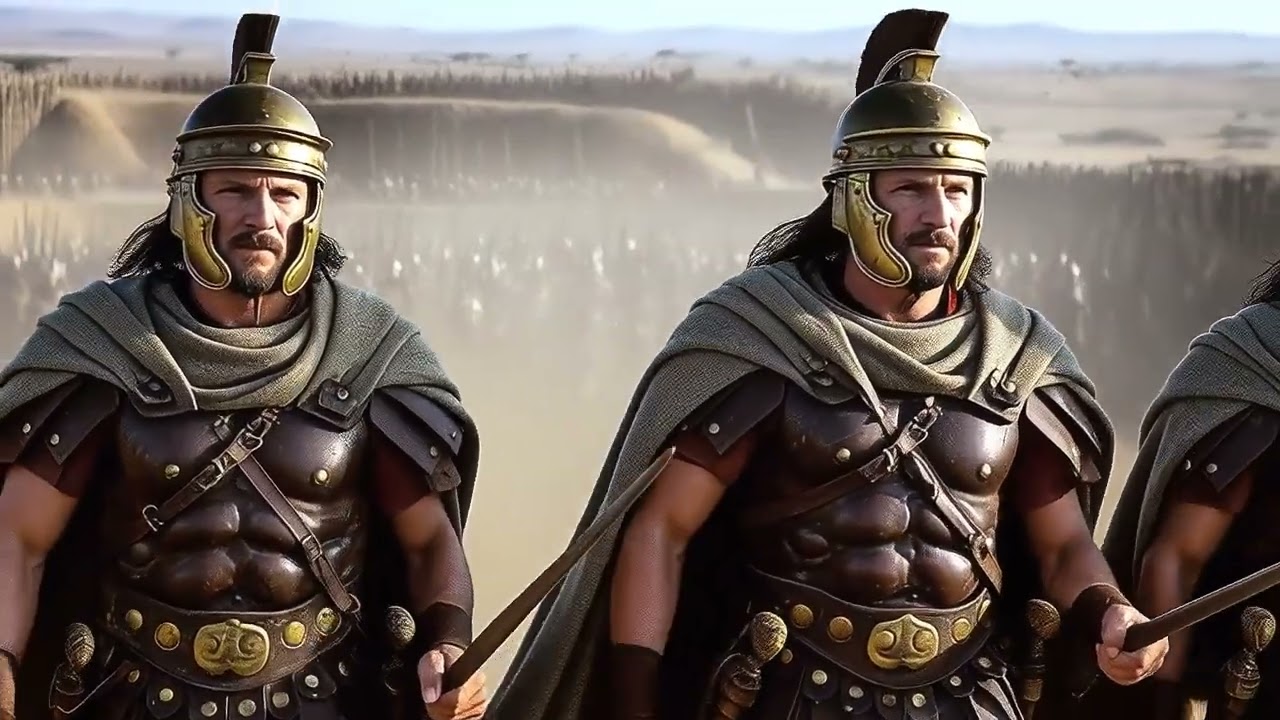
In the pre-dawn chill of 202 BC, across the sun-baked Zama plains, Roman vanguard scouts moved like silent shadows along the eastern ridge. Each warrior gripped a single pilum firmly at rest, their broad shoulders squared against the cooling air. Golden hour light carved sharp chiaroscuro across their weathered leather cuirasses and intricate bronze helmets. They stood shoulder-to-shoulder, gazing intensely toward the distant Carthaginian camp, their subtle breathing syncing with the steady wind that gently blew their dark hair. The heavy static fabrics of their cloaks hung motionless as they shifted their weight slowly, scanning the horizon for enemy movements. Every muscle remained coiled, ready to sprint forward in perfect unison. The vast landscape stretched under a clear sky, devoid of thick smoke or floating particles, allowing their steady advance to cut through the morning stillness like a drawn blade.
At first light in 202 BC, upon the sweeping southern grasslands, Massinissa’s Numidian cavalry aligned their mounts along the western approach. Each rider gripped a single curved javelin firmly at rest, their athletic frames leaning forward with disciplined anticipation. Volumetric sunlight pierced through the clear atmosphere, illuminating the intricate scale armor draped over their broad chests. They marched forward slowly in exact unison, their horses stepping in synchronized rhythm across the dry earth. Wind gently blew through their braided hair as they gazed intensely toward the distant Roman lines, their subtle breathing marking the quiet before the storm. Heavy wool cloaks settled over their shoulders while they shifted their weight slowly, maintaining perfect formation. No chaotic movement broke their steady advance, only the disciplined march of allied warriors prepared to strike the enemy flank.
In the early morning of 202 BC, along the eastern war ridge, the Carthaginian war elephants advanced in a towering phalanx of muscle and iron. Each mahout gripped a single driving goad firmly at rest, his strong, mature frame braced against the shifting weight of the armored beast. Stark chiaroscuro lighting carved deep shadows across the intricate bronze plates mounted on the elephants’ flanks. They marched forward slowly, their massive feet striking the cracked earth in perfect synchronization. Volumetric rays filtered through the clear sky, catching the heavy static fabrics of their ceremonial blankets as they shifted their weight slowly. The riders stood strong, gazing intensely toward the Roman center, their subtle breathing steady beneath the heat of the rising sun. No floating particles marred the air, only the disciplined advance of ancient siege engines moving as one unstoppable force.
By mid-morning in 202 BC, across the central Zama basin, the Roman light infantry launched their opening barrage against the advancing Carthaginian lines. Each velite gripped a single throwing spear firmly at rest before unleashing it with coordinated force, their athletic bodies twisting in perfect unison. Golden hour lighting bathed the battlefield in warm tones, highlighting the intricate bronze shields they carried on their left arms. They stood shoulder-to-shoulder, gazing intensely toward the enemy mercenaries, their subtle breathing controlled as they shifted their weight slowly to maintain formation. Heavy wool tunics settled over their shoulders while they marched forward slowly, releasing their javelins in rhythmic volleys. The clear atmosphere allowed every projectile to trace a sharp arc across the dry plain, striking the opposing ranks without obstruction or chaotic interference.
In the late morning of 202 BC, along the western mercenary ridge, the Carthaginian mercenary infantry surged forward in a wall of iron and fury. Each warrior gripped a single long sword firmly at rest, their broad-shouldered frames moving with disciplined aggression toward the Roman center. Volumetric sunlight cut through the clear sky, illuminating the intricate chainmail and weathered wooden shields that protected their chests. They marched forward slowly in exact unison, their heavy boots striking the earth in synchronized rhythm. Wind gently blew through their dark hair as they gazed intensely toward the advancing legions, their subtle breathing steady beneath the weight of their armor. The heavy static fabrics of their cloaks hung motionless while they shifted their weight slowly, maintaining perfect alignment. No chaotic movement broke their advance, only the disciplined march of allied warriors prepared to shatter the Roman front.
At noon in 202 BC, upon the central Zama plateau, the Roman first line advanced in a disciplined wall of steel and resolve. Each princeps gripped a single gladius firmly at rest, his strong, mature frame squared against the relentless heat. Stark chiaroscuro lighting carved deep shadows across the intricate bronze helmets and heavy leather cuirasses. They stood shoulder-to-shoulder, gazing intensely toward the breaking Carthaginian center, their subtle breathing synchronized with the steady wind that gently blew their hair. The heavy static fabrics of their cloaks settled over their broad shoulders as they shifted their weight slowly, maintaining perfect formation. No chaotic movement broke their advance, only the disciplined march of veteran warriors prepared to deliver the decisive blow. The clear atmosphere allowed their synchronized steps to echo across the plain, a rhythmic thunder heralding the collapse of the enemy front.
In the early afternoon of 202 BC, along the eastern veteran ridge, Hannibal’s veteran infantry held their ground against the crushing Roman advance. Each warrior gripped a single long spear firmly at rest, his athletic frame braced against the relentless pressure of the enemy lines. Volumetric rays filtered through the clear sky, illuminating the intricate bronze plates and weathered wooden shields that covered their chests. They marched forward slowly in exact unison, their heavy boots striking the cracked earth in perfect synchronization. Wind gently blew through their dark hair as they gazed intensely toward the Roman center, their subtle breathing steady beneath the weight of their armor. The heavy static fabrics of their cloaks hung motionless while they shifted their weight slowly, maintaining perfect alignment. No chaotic movement broke their defense, only the disciplined stand of battle-hardened warriors prepared to anchor the Carthaginian line.
By mid-afternoon in 202 BC, across the southern grasslands, the Numidian skirmishers circled the enemy rear in a fluid ring of motion. Each rider gripped a single curved javelin firmly at rest, their strong, mature frames leaning forward with disciplined precision. Golden hour lighting bathed the battlefield in warm tones, highlighting the intricate scale armor draped over their broad chests. They marched forward slowly in exact unison, their horses stepping in synchronized rhythm across the dry earth. Wind gently blew through their braided hair as they gazed intensely toward the retreating Carthaginian center, their subtle breathing controlled as they shifted their weight slowly. Heavy wool cloaks settled over their shoulders while they maintained perfect formation. No chaotic movement broke their advance, only the disciplined pursuit of allied warriors prepared to seal the enemy’s collapse.
In the late afternoon of 202 BC, upon the western plains, the Roman cavalry pursuit surged forward in a thunderous wave of steel and momentum. Each legionary gripped a single cavalry spear firmly at rest, his athletic frame braced against the relentless charge. Stark chiaroscuro lighting carved deep shadows across the intricate bronze helmets and heavy leather armor. They stood shoulder-to-shoulder, gazing intensely toward the breaking Carthaginian flank, their subtle breathing synchronized with the steady wind that gently blew their hair. The heavy static fabrics of their cloaks settled over their broad shoulders as they shifted their weight slowly, maintaining perfect formation. No chaotic movement broke their advance, only the disciplined march of mounted warriors prepared to shatter the enemy’s retreat. The clear atmosphere allowed their synchronized steps to echo across the plain, a rhythmic thunder heralding the final collapse of the opposing army.
At dusk in 202 BC, within the central command tent, the Carthaginian command circle observed the battlefield from a raised wooden platform. Each officer gripped a single tactical staff firmly at rest, his strong, mature frame squared against the fading light. Volumetric sunlight pierced through the clear atmosphere, illuminating the intricate bronze insignia and weathered leather armor that covered their chests. They stood shoulder-to-shoulder, gazing intensely toward the collapsing enemy lines, their subtle breathing steady as they shifted their weight slowly. The heavy static fabrics of their cloaks hung motionless while they maintained perfect alignment. No chaotic movement broke their stance, only the disciplined observation of veteran commanders prepared to direct the final withdrawal. The clear sky allowed their focused gazes to track every shift in the battle’s momentum without obstruction.
In the twilight of 202 BC, along the eastern reserve ridge, the Roman second line deployed in a final wall of iron and resolve. Each triarius gripped a single pilum firmly at rest, his broad-shouldered frame moving with disciplined aggression toward the enemy center. Golden hour lighting bathed the battlefield in warm tones, highlighting the intricate bronze shields and heavy leather cuirasses. They marched forward slowly in exact unison, their heavy boots striking the cracked earth in perfect synchronization. Wind gently blew through their dark hair as they gazed intensely toward the breaking Carthaginian ranks, their subtle breathing controlled as they shifted their weight slowly. The heavy static fabrics of their cloaks settled over their shoulders while they maintained perfect formation. No chaotic movement broke their advance, only the disciplined march of veteran warriors prepared to deliver the decisive strike.
By late dusk in 202 BC, across the western reserve plain, the Carthaginian reserve infantry surged forward to anchor the collapsing center. Each warrior gripped a single long sword firmly at rest, his athletic frame braced against the relentless pressure of the Roman advance. Stark chiaroscuro lighting carved deep shadows across the intricate chainmail and weathered wooden shields. They stood shoulder-to-shoulder, gazing intensely toward the advancing legions, their subtle breathing synchronized with the steady wind that gently blew their hair. The heavy static fabrics of their cloaks settled over their broad shoulders as they shifted their weight slowly, maintaining perfect formation. No chaotic movement broke their defense, only the disciplined stand of battle-hardened warriors prepared to hold the final line. The clear atmosphere allowed their synchronized steps to echo across the plain, a rhythmic thunder marking the end of organized resistance.
In the deep twilight of 202 BC, upon the northern approach, the Numidian heavy riders aligned their mounts for a final coordinated strike. Each warrior gripped a single heavy lance firmly at rest, his strong, mature frame leaning forward with disciplined precision. Volumetric rays filtered through the clear sky, illuminating the intricate bronze plates and weathered leather armor that covered their chests. They marched forward slowly in exact unison, their horses stepping in synchronized rhythm across the dry earth. Wind gently blew through their braided hair as they gazed intensely toward the retreating Carthaginian center, their subtle breathing steady as they shifted their weight slowly. The heavy static fabrics of their cloaks hung motionless while they maintained perfect alignment. No chaotic movement broke their advance, only the disciplined march of allied warriors prepared to seal the enemy’s defeat.
At nightfall in 202 BC, along the eastern gap, the Roman flanking wedge pierced the enemy rear in a precise strike of steel and momentum. Each legionary gripped a single gladius firmly at rest, his athletic frame braced against the relentless charge. Golden hour lighting bathed the battlefield in warm tones, highlighting the intricate bronze helmets and heavy leather cuirasses. They stood shoulder-to-shoulder, gazing intensely toward the breaking Carthaginian flank, their subtle breathing synchronized with the steady wind that gently blew their hair. The heavy static fabrics of their cloaks settled over their broad shoulders as they shifted their weight slowly, maintaining perfect formation. No chaotic movement broke their advance, only the disciplined march of mounted warriors prepared to shatter the enemy’s retreat. The clear atmosphere allowed their synchronized steps to echo across the plain, a rhythmic thunder heralding the final collapse of the opposing army.
In the quiet hours of 202 BC, across the central plain, the Carthaginian center breakers stood firm against the crushing weight of the Roman advance. Each warrior gripped a single long spear firmly at rest, his broad-shouldered frame moving with disciplined aggression toward the enemy lines. Stark chiaroscuro lighting carved deep shadows across the intricate bronze plates and weathered wooden shields. They marched forward slowly in exact unison, their heavy boots striking the cracked earth in perfect synchronization. Wind gently blew through their dark hair as they gazed intensely toward the advancing legions, their subtle breathing controlled as they shifted their weight slowly. The heavy static fabrics of their cloaks settled over their shoulders while they maintained perfect formation. No chaotic movement broke their defense, only the disciplined stand of battle-hardened warriors prepared to anchor the final line.
By midnight in 202 BC, atop the western command hill, the Roman command standard observed the battlefield from a raised wooden platform. Each officer gripped a single tactical staff firmly at rest, his strong, mature frame squared against the fading light. Volumetric sunlight pierced through the clear atmosphere, illuminating the intricate bronze insignia and weathered leather armor that covered their chests. They stood shoulder-to-shoulder, gazing intensely toward the collapsing enemy lines, their subtle breathing steady as they shifted their weight slowly. The heavy static fabrics of their cloaks hung motionless while they maintained perfect alignment. No chaotic movement broke their stance, only the disciplined observation of veteran commanders prepared to direct the final victory. The clear sky allowed their focused gazes to track every shift in the battle’s momentum without obstruction.
In the early dawn of 202 BC, upon the southern ridge, the Numidian cavalry return surged forward in a final wave of disciplined momentum. Each rider gripped a single curved javelin firmly at rest, his athletic frame braced against the relentless charge. Golden hour lighting bathed the battlefield in warm tones, highlighting the intricate scale armor draped over their broad chests. They marched forward slowly in exact unison, their horses stepping in synchronized rhythm across the dry earth. Wind gently blew through their braided hair as they gazed intensely toward the retreating Carthaginian center, their subtle breathing controlled as they shifted their weight slowly. Heavy wool cloaks settled over their shoulders while they maintained perfect formation. No chaotic movement broke their advance, only the disciplined pursuit of allied warriors prepared to seal the enemy’s collapse.
At sunrise in 202 BC, across the western exit, the Carthaginian rout formation broke into scattered lines of disciplined retreat. Each warrior gripped a single long sword firmly at rest, his strong, mature frame moving with controlled urgency toward the distant hills. Stark chiaroscuro lighting carved deep shadows across the intricate chainmail and weathered wooden shields. They stood shoulder-to-shoulder, gazing intensely toward the advancing Roman lines, their subtle breathing synchronized with the steady wind that gently blew their hair. The heavy static fabrics of their cloaks settled over their broad shoulders as they shifted their weight slowly, maintaining perfect formation. No chaotic movement broke their advance, only the disciplined march of veteran warriors prepared to preserve their remaining strength. The clear atmosphere allowed their synchronized steps to echo across the plain, a rhythmic thunder marking the end of organized resistance.
By mid-morning in 202 BC, along the central plateau, the Roman victory advance moved forward in a final display of iron and resolve. Each legionary gripped a single gladius firmly at rest, his broad-shouldered frame squared against the rising sun. Volumetric rays filtered through the clear sky, illuminating the intricate bronze helmets and heavy leather cuirasses. They marched forward slowly in exact unison, their heavy boots striking the cracked earth in perfect synchronization. Wind gently blew through their dark hair as they gazed intensely toward the broken Carthaginian ranks, their subtle breathing controlled as they shifted their weight slowly. The heavy static fabrics of their cloaks settled over their shoulders while they maintained perfect formation. No chaotic movement broke their advance, only the disciplined march of veteran warriors prepared to claim the decisive triumph.
At noon in 202 BC, upon the eastern plateau, the Numidian victory stance held their ground in a final display of allied strength. Each warrior gripped a single heavy lance firmly at rest, his athletic frame braced against the steady wind. Stark chiaroscuro lighting carved deep shadows across the intricate bronze plates and weathered leather armor. They stood shoulder-to-shoulder, gazing intensely toward the distant Roman lines, their subtle breathing synchronized with the clear atmosphere that allowed every detail to remain sharp. The heavy static fabrics of their cloaks settled over their broad shoulders as they shifted their weight slowly, maintaining perfect alignment. No chaotic movement broke their stance, only the disciplined observation of veteran riders prepared to secure the hard-won peace. The golden hour light bathed the battlefield in warm tones, marking the end of an era and the dawn of a new order.