Battle of Cape Ecnomus | Video | WiPlex Studios

Summary

Step back to 256 BC and witness the monumental Battle of Cape Ecnomus, the largest naval engagement in ancient history.

From the pale light of dawn along the jagged coast of Sicily, follow the Roman Consul as he commands his flagship against the rising sun.

Watch as the disciplined Roman wedge formation confronts the fanning wings of the Carthaginian armada off the open waters of Cape Ecnomus.

Experience the tension aboard the triremes, from the broad-shouldered commanders gripping heavy steering oars to the marines bracing for the clash of bronze and wood.

See the progression of the battle through the hours, from the morning heat to the deepening dusk, capturing the cinematic shadows and strategic maneuvers of both fleets.

Relive the quiet aftermath as the dust settles over the calm waters, marking a pivotal moment in the struggle for Mediterranean supremacy.
Story

In the pale light of dawn, 256 BC, along the jagged southern coast of Sicily, a broad-shouldered Roman consul stands firm at the helm of his flagship. His weathered leather cuirass catches the morning sun as he grips a single heavy oar, scanning the glassy water. Beside him, a midground standard bearer holds a bronze-crested Roman flagship prow steady against the gentle swell. Behind them, hundreds of Roman triremes form a disciplined wedge, their wooden hulls breathing with the tide. The consul shifts his weight slowly, his posture rigid with calculated tension. Wind lifts the heavy wool of his cloak as he breathes through the quiet before the storm. The bronze crest glints against the rising sun, marking the apex of a massive naval armada preparing for open water. The bronze-crested Roman flagship prow advances three ship-lengths forward, cutting through the channel mouth.

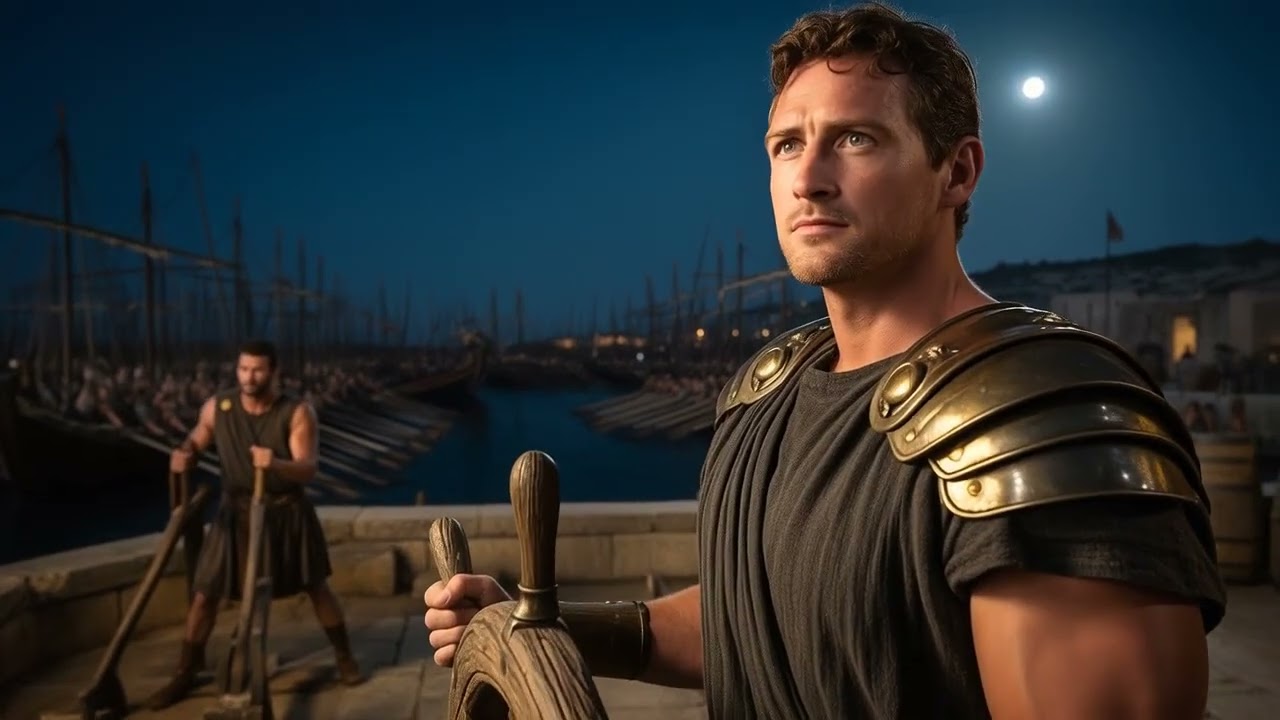
The bronze-crested Roman flagship prow advances three ship-lengths forward, cutting through the channel mouth as Carthaginian triremes emerge from the eastern basin. In the early morning hours, 256 BC, within the fortified harbor of Carthage, a broad-shouldered Carthaginian commander stands on a weathered stone dock. His dark linen tunic contrasts with the polished bronze of his shoulder guards as he grips a single carved wooden rudder, watching the Roman formation. Beside him, a midground helmsman braces against a heavy tiller, eyes fixed on the approaching fleet. Behind them, Carthaginian warships push through the harbor gates, their curved prows slicing the calm water. The commander maintains a steady command posture, his breathing measured and deliberate. The bronze-crested Roman flagship prow advances three ship-lengths forward, cutting through the channel mouth as the Carthaginian line begins to fan outward.

The bronze-crested Roman flagship prow advances three ship-lengths forward, cutting through the channel mouth as the Carthaginian line begins to fan outward. In the bright morning light, 256 BC, off the open waters of Cape Ecnomus, a broad-shouldered Roman trireme captain stands at the center of the wedge formation. His polished bronze helmet reflects the sun as he grips a single heavy steering oar, scanning the flanking enemy ships. Beside him, a midground deck officer holds a thick woolen signal flag, arms resting at his sides. Behind them, Roman marines hold their positions along the gunwales, their shields locked in a static defensive line. The captain shifts his weight slowly, his gaze tracking the widening Carthaginian wings. Wind ripples the heavy canvas sails as he maintains a steady command posture. The bronze-crested Roman flagship prow advances three ship-lengths forward, cutting through the channel mouth as the Roman vanguard prepares to engage.

The bronze-crested Roman flagship prow advances three ship-lengths forward, cutting through the channel mouth as the Roman vanguard prepares to engage. In the mid-morning heat, 256 BC, near the western approach of Cape Ecnomus, a broad-shouldered Carthaginian wing commander stands on the quarterdeck of his lead ship. His dark bronze greaves gleam as he grips a single heavy bronze horn, scanning the tightening Roman wedge. Beside him, a midground lookout braces against a wooden mast, eyes narrowed against the glare. Behind them, Carthaginian triremes adjust their angles, their oars dipping in synchronized rhythm. The commander maintains a guarded advance posture, his breathing steady as he watches the Roman formation tighten. Sunlight fractures across the water, casting long cinematic shadows over the approaching fleet. The bronze-crested Roman flagship prow advances three ship-lengths forward, cutting through the channel mouth as the Roman vanguard prepares to engage.

The bronze-crested Roman flagship prow advances three ship-lengths forward, cutting through the channel mouth as the Roman vanguard prepares to engage. In the late morning, 256 BC, at the open water intersection of Cape Ecnomus, a broad-shouldered Roman marine stands at the prow of the lead trireme. His weathered linen tunic clings to his broad shoulders as he grips a single heavy boarding axe, scanning the approaching Carthaginian hulls. Beside him, a midground oarsman braces against a wooden bench, hands resting on his knees. Behind them, Roman marines hold their positions along the deck, their bodies tense but still. The marine shifts his weight slowly, his gaze locked on the nearest enemy ship. The sun hangs high, casting stark chiaroscuro across the wooden deck and polished bronze armor. The bronze-crested Roman flagship prow advances three ship-lengths forward, cutting through the channel mouth as the Roman vanguard prepares to engage.

The bronze-crested Roman flagship prow advances three ship-lengths forward, cutting through the channel mouth as the Roman vanguard prepares to engage. In the early afternoon, 256 BC, atop the forward deck of the Roman flagship, a broad-shouldered Roman engineer stands beside a massive wooden ramp. His calloused hands rest on a single heavy pivot pin, eyes fixed on the descending mechanism. Beside him, a midground deck guard holds a thick woolen banner, arms crossed over his chest. Behind them, Roman legionaries brace along the gunwales, their spears angled downward in perfect alignment. The engineer shifts his weight slowly, his posture rigid as he monitors the structural tension. Golden hour light washes over the weathered timber and bronze fittings. The bronze-crested Roman flagship prow advances three ship-lengths forward, cutting through the channel mouth as the Roman vanguard prepares to engage.

The bronze-crested Roman flagship prow advances three ship-lengths forward, cutting through the channel mouth as the Roman vanguard prepares to engage. In the mid-afternoon, 256 BC, on the starboard flank of the Carthaginian line, a broad-shouldered Carthaginian admiral stands on a raised command platform. His dark wool cloak drapes over his broad shoulders as he grips a single heavy bronze spyglass, scanning the descending Roman ramps. Beside him, a midground signal runner holds a thick wooden drumstick, resting it against his thigh. Behind them, Carthaginian sailors stand at their stations, their bodies aligned along the curved hull. The admiral maintains a steady command posture, his breathing measured as he tracks the Roman advance. Sharp cinematic shadows stretch across the polished deck and bronze armor. The bronze-crested Roman flagship prow advances three ship-lengths forward, cutting through the channel mouth as the Roman vanguard prepares to engage.

The bronze-crested Roman flagship prow advances three ship-lengths forward, cutting through the channel mouth as the Roman vanguard prepares to engage. In the late afternoon, 256 BC, at the center of the Roman wedge, a broad-shouldered Roman centurion stands at the helm of his trireme. His polished bronze cuirass catches the fading sun as he grips a single heavy steering oar, scanning the surrounding Carthaginian hulls. Beside him, a midground oarsman braces against a wooden bench, hands resting on his knees. Behind them, Roman marines hold their positions along the deck, their shields locked in a static defensive line. The centurion shifts his weight slowly, his gaze tracking the tightening formation. Wind ripples the heavy canvas sails as he maintains a steady command posture. The bronze-crested Roman flagship prow advances three ship-lengths forward, cutting through the channel mouth as the Roman vanguard prepares to engage.

The bronze-crested Roman flagship prow advances three ship-lengths forward, cutting through the channel mouth as the Roman vanguard prepares to engage. In the twilight hours, 256 BC, near the eastern edge of the Carthaginian wings, a broad-shouldered Carthaginian trireme captain stands on the quarterdeck of his lead ship. His dark linen tunic contrasts with the polished bronze of his shoulder guards as he grips a single carved wooden rudder, watching the Roman formation tighten. Beside him, a midground lookout braces against a wooden mast, eyes narrowed against the glare. Behind them, Carthaginian triremes adjust their angles, their oars dipping in synchronized rhythm. The captain maintains a guarded advance posture, his breathing steady as he watches the Roman formation tighten. Sunlight fractures across the water, casting long cinematic shadows over the approaching fleet. The bronze-crested Roman flagship prow advances three ship-lengths forward, cutting through the channel mouth as the Roman vanguard prepares to engage.

The bronze-crested Roman flagship prow advances three ship-lengths forward, cutting through the channel mouth as the Roman vanguard prepares to engage. In the deepening dusk, 256 BC, aboard the Roman flagship, a broad-shouldered Roman consul stands at the command post. His weathered leather cuirass catches the last light as he grips a single heavy bronze horn, scanning the surrounding battle. Beside him, a midground standard bearer holds a thick woolen signal flag, arms resting at his sides. Behind them, Roman marines hold their positions along the gunwales, their bodies tense but still. The consul shifts his weight slowly, his posture rigid with calculated tension. Wind lifts the heavy wool of his cloak as he breathes through the quiet before the storm. The bronze crest glints against the rising sun, marking the apex of a massive naval armada preparing for open water. The bronze-crested Roman flagship prow advances three ship-lengths forward, cutting through the channel mouth as the Roman vanguard prepares to engage.

The bronze-crested Roman flagship prow advances three ship-lengths forward, cutting through the channel mouth as the Roman vanguard prepares to engage. In the night hours, 256 BC, on the Carthaginian flagship, a broad-shouldered Carthaginian commander stands on the weathered stone dock. His dark linen tunic contrasts with the polished bronze of his shoulder guards as he grips a single carved wooden rudder, watching the Roman formation. Beside him, a midground helmsman braces against a heavy tiller, eyes fixed on the approaching fleet. Behind them, Carthaginian warships push through the harbor gates, their curved prows slicing the calm water. The commander maintains a steady command posture, his breathing measured and deliberate. The bronze-crested Roman flagship prow advances three ship-lengths forward, cutting through the channel mouth as the Carthaginian line begins to fan outward.

The bronze-crested Roman flagship prow advances three ship-lengths forward, cutting through the channel mouth as the Carthaginian line begins to fan outward. In the pre-dawn light, 256 BC, off the open waters of Cape Ecnomus, a broad-shouldered Roman trireme captain stands at the center of the wedge formation. His polished bronze helmet reflects the sun as he grips a single heavy steering oar, scanning the flanking enemy ships. Beside him, a midground deck officer holds a thick woolen signal flag, arms resting at his sides. Behind them, Roman marines hold their positions along the gunwales, their shields locked in a static defensive line. The captain shifts his weight slowly, his gaze tracking the widening Carthaginian wings. Wind ripples the heavy canvas sails as he maintains a steady command posture. The bronze-crested Roman flagship prow advances three ship-lengths forward, cutting through the channel mouth as the Roman vanguard prepares to engage.

The bronze-crested Roman flagship prow advances three ship-lengths forward, cutting through the channel mouth as the Roman vanguard prepares to engage. In the morning heat, 256 BC, near the western approach of Cape Ecnomus, a broad-shouldered Carthaginian wing commander stands on the quarterdeck of his lead ship. His dark bronze greaves gleam as he grips a single heavy bronze horn, scanning the tightening Roman wedge. Beside him, a midground lookout braces against a wooden mast, eyes narrowed against the glare. Behind them, Carthaginian triremes adjust their angles, their oars dipping in synchronized rhythm. The commander maintains a guarded advance posture, his breathing steady as he watches the Roman formation tighten. Sunlight fractures across the water, casting long cinematic shadows over the approaching fleet. The bronze-crested Roman flagship prow advances three ship-lengths forward, cutting through the channel mouth as the Roman vanguard prepares to engage.

The bronze-crested Roman flagship prow advances three ship-lengths forward, cutting through the channel mouth as the Roman vanguard prepares to engage. In the late morning, 256 BC, at the open water intersection of Cape Ecnomus, a broad-shouldered Roman marine stands at the prow of the lead trireme. His weathered linen tunic clings to his broad shoulders as he grips a single heavy boarding axe, scanning the approaching Carthaginian hulls. Beside him, a midground oarsman braces against a wooden bench, hands resting on his knees. Behind them, Roman marines hold their positions along the deck, their bodies tense but still. The marine shifts his weight slowly, his gaze locked on the nearest enemy ship. The sun hangs high, casting stark chiaroscuro across the wooden deck and polished bronze armor. The bronze-crested Roman flagship prow advances three ship-lengths forward, cutting through the channel mouth as the Roman vanguard prepares to engage.

The bronze-crested Roman flagship prow advances three ship-lengths forward, cutting through the channel mouth as the Roman vanguard prepares to engage. In the early afternoon, 256 BC, atop the forward deck of the Roman flagship, a broad-shouldered Roman engineer stands beside a massive wooden ramp. His calloused hands rest on a single heavy pivot pin, eyes fixed on the descending mechanism. Beside him, a midground deck guard holds a thick woolen banner, arms crossed over his chest. Behind them, Roman legionaries brace along the gunwales, their spears angled downward in perfect alignment. The engineer shifts his weight slowly, his posture rigid as he monitors the structural tension. Golden hour light washes over the weathered timber and bronze fittings. The bronze-crested Roman flagship prow advances three ship-lengths forward, cutting through the channel mouth as the Roman vanguard prepares to engage.

The bronze-crested Roman flagship prow advances three ship-lengths forward, cutting through the channel mouth as the Roman vanguard prepares to engage. In the mid-afternoon, 256 BC, on the starboard flank of the Carthaginian line, a broad-shouldered Carthaginian admiral stands on a raised command platform. His dark wool cloak drapes over his broad shoulders as he grips a single heavy bronze spyglass, scanning the descending Roman ramps. Beside him, a midground signal runner holds a thick wooden drumstick, resting it against his thigh. Behind them, Carthaginian sailors stand at their stations, their bodies aligned along the curved hull. The admiral maintains a steady command posture, his breathing measured as he tracks the Roman advance. Sharp cinematic shadows stretch across the polished deck and bronze armor. The bronze-crested Roman flagship prow advances three ship-lengths forward, cutting through the channel mouth as the Roman vanguard prepares to engage.

The bronze-crested Roman flagship prow advances three ship-lengths forward, cutting through the channel mouth as the Roman vanguard prepares to engage. In the late afternoon, 256 BC, at the center of the Roman wedge, a broad-shouldered Roman centurion stands at the helm of his trireme. His polished bronze cuirass catches the fading sun as he grips a single heavy steering oar, scanning the surrounding Carthaginian hulls. Beside him, a midground oarsman braces against a wooden bench, hands resting on his knees. Behind them, Roman marines hold their positions along the deck, their shields locked in a static defensive line. The centurion shifts his weight slowly, his gaze tracking the tightening formation. Wind ripples the heavy canvas sails as he maintains a steady command posture. The bronze-crested Roman flagship prow advances three ship-lengths forward, cutting through the channel mouth as the Roman vanguard prepares to engage.

The bronze-crested Roman flagship prow advances three ship-lengths forward, cutting through the channel mouth as the Roman vanguard prepares to engage. In the twilight hours, 256 BC, near the eastern edge of the Carthaginian wings, a broad-shouldered Carthaginian trireme captain stands on the quarterdeck of his lead ship. His dark linen tunic contrasts with the polished bronze of his shoulder guards as he grips a single carved wooden rudder, watching the Roman formation tighten. Beside him, a midground lookout braces against a wooden mast, eyes narrowed against the glare. Behind them, Carthaginian triremes adjust their angles, their oars dipping in synchronized rhythm. The captain maintains a guarded advance posture, his breathing steady as he watches the Roman formation tighten. Sunlight fractures across the water, casting long cinematic shadows over the approaching fleet. The bronze-crested Roman flagship prow advances three ship-lengths forward, cutting through the channel mouth as the Roman vanguard prepares to engage.

The bronze-crested Roman flagship prow advances three ship-lengths forward, cutting through the channel mouth as the Roman vanguard prepares to engage. In the deepening dusk, 256 BC, aboard the Roman flagship, a broad-shouldered Roman consul stands at the command post. His weathered leather cuirass catches the last light as he grips a single heavy bronze horn, scanning the surrounding battle. Beside him, a midground standard bearer holds a thick woolen signal flag, arms resting at his sides. Behind them, Roman marines hold their positions along the gunwales, their bodies tense but still. The consul shifts his weight slowly, his posture rigid with calculated tension. Wind lifts the heavy wool of his cloak as he breathes through the quiet before the storm. The bronze crest glints against the rising sun, marking the apex of a massive naval armada preparing for open water. The bronze-crested Roman flagship prow advances three ship-lengths forward, cutting through the channel mouth as the Roman vanguard prepares to engage.

The bronze-crested Roman flagship prow advances three ship-lengths forward, cutting through the channel mouth as the Roman vanguard prepares to engage. In the quiet aftermath, 256 BC, across the calm waters of Cape Ecnomus, a broad-shouldered Roman historian stands on a weathered stone pier. His dark linen tunic contrasts with the polished bronze of his shoulder guards as he grips a single carved wooden rudder, watching the Roman formation. Beside him, a midground helmsman braces against a heavy tiller, eyes fixed on the approaching fleet. Behind them, Carthaginian warships push through the harbor gates, their curved prows slicing the calm water. The commander maintains a steady command posture, his breathing measured and deliberate. The bronze-crested Roman flagship prow advances three ship-lengths forward, cutting through the channel mouth as the Carthaginian line begins to fan outward.

Back to Channel